
Light Energy and Pigment Explained
Spots and redness look like surface problems, but light treatment works by what the pigment does with the light. This article explains that step.
What you are asking
You have a dark spot or a red patch and you want to know what intense pulsed light actually does to it before you book a session.
What the light does
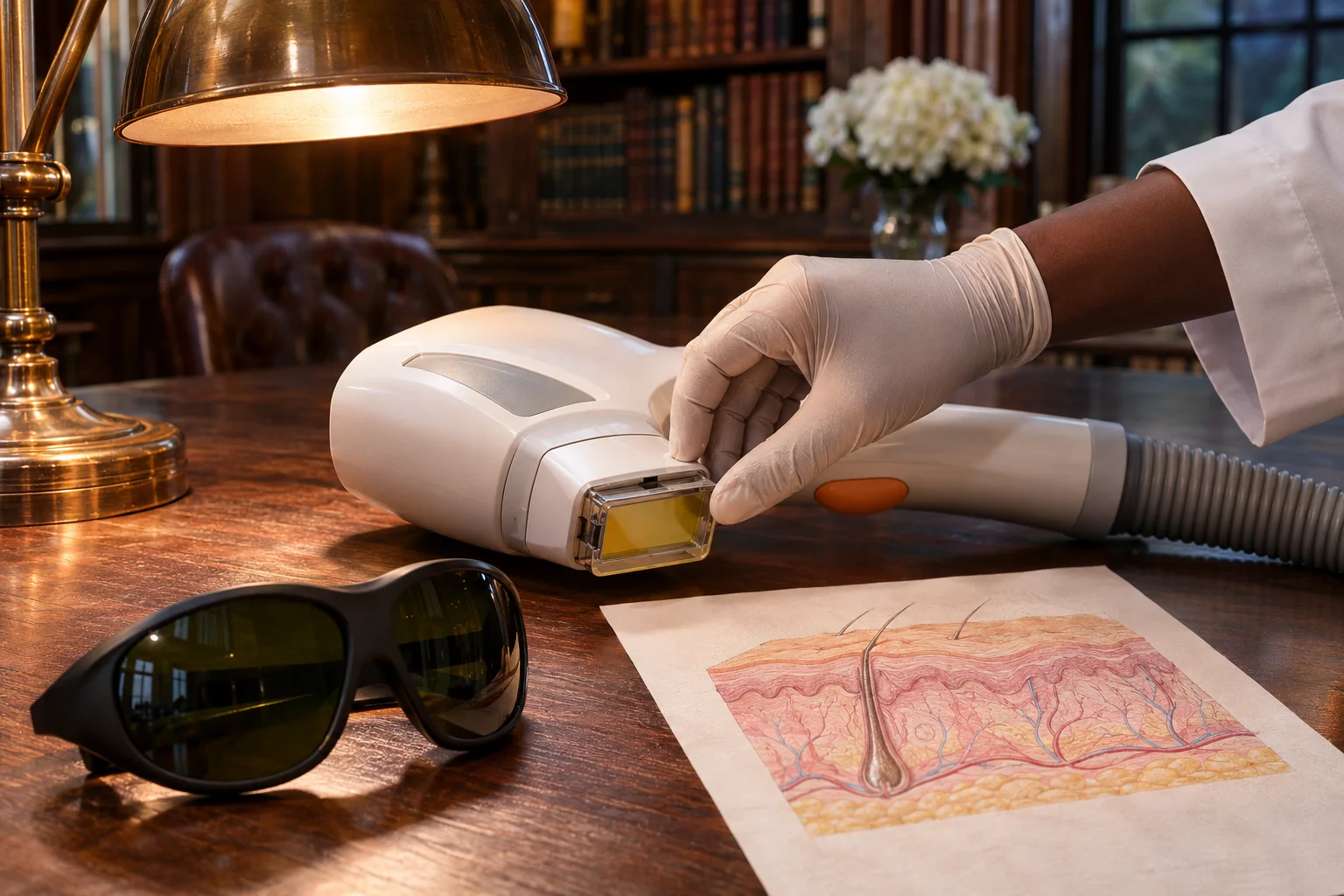
The site spaandbeautytoday.com says light energy from the IPL is absorbed by the pigment cells in your skin and is then converted into heat, which clears out the unwanted pigment as well as overactive pigment-producing cells, resulting in an even distribution of the pigmented area. Its full explainer is What is Intense Pulsed Light (IPL) Photofacial and How Can it Help You?.
The site northbiomedical.com describes the same step for two targets: the pigment absorbs the light and heats up, and it is either broken apart in the case of a sun spot or coagulated and reabsorbed in the case of a visible vessel.
Reading the patch before treating it
Before light goes near a patch, it helps to know what the patch is. The my.clevelandclinic.org guide to skin discoloration: causes, conditions and treatments is a place to start, and DermNet's entry on intense pulsed light therapy covers the device.
Doing it yourself, and calling someone
Understanding the mechanism is a job for home. Naming what a patch is, and whether light is the right tool for it, belongs with a clinician who can look at your skin.